Monday, October 14, 2013

The Experiment Celebrating the 40th Anniversary of the Albury Wodonga Growth Centre at Arts Space Wodonga

 Saturday October 26 Artist Forum, Arts Space


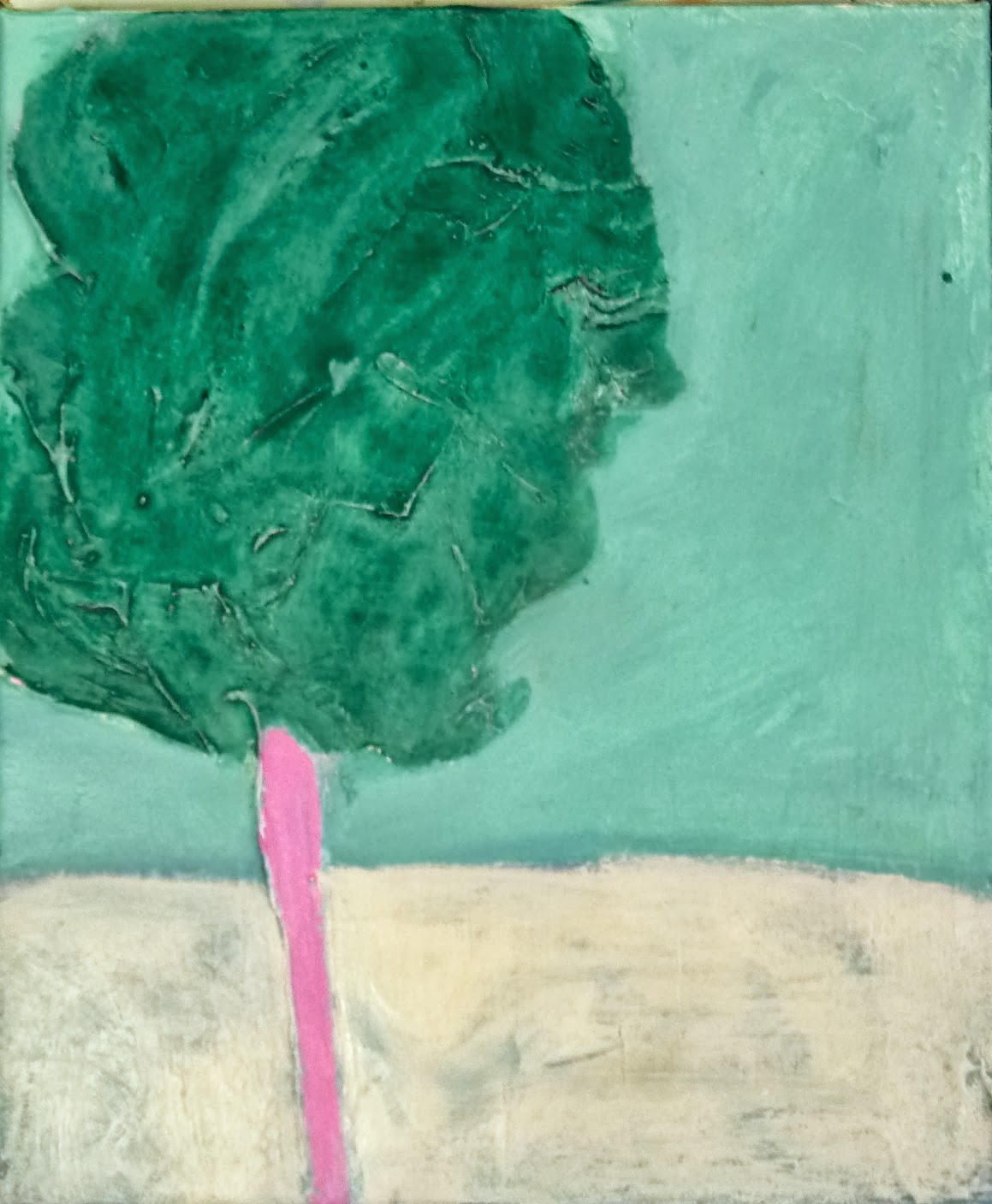
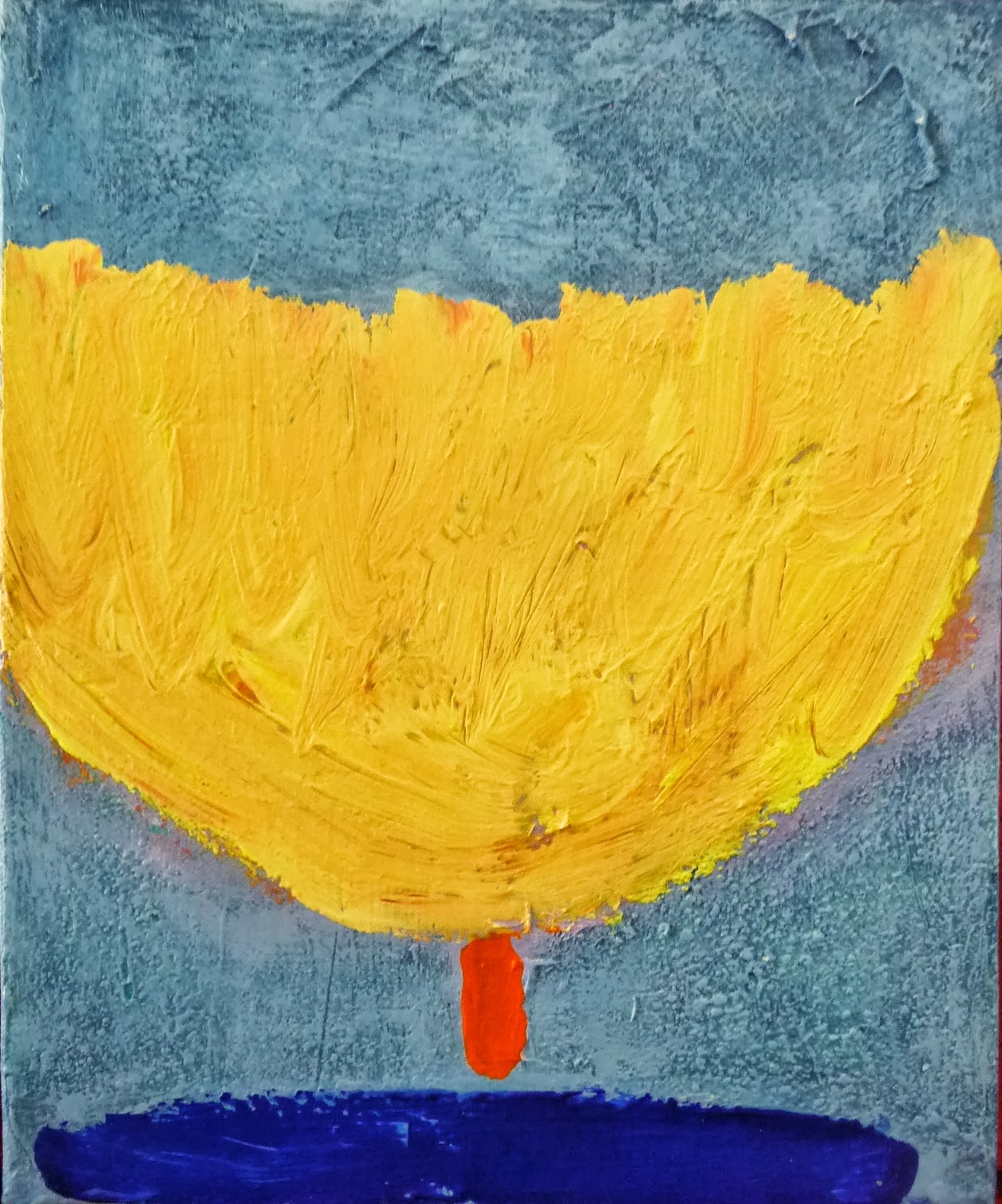
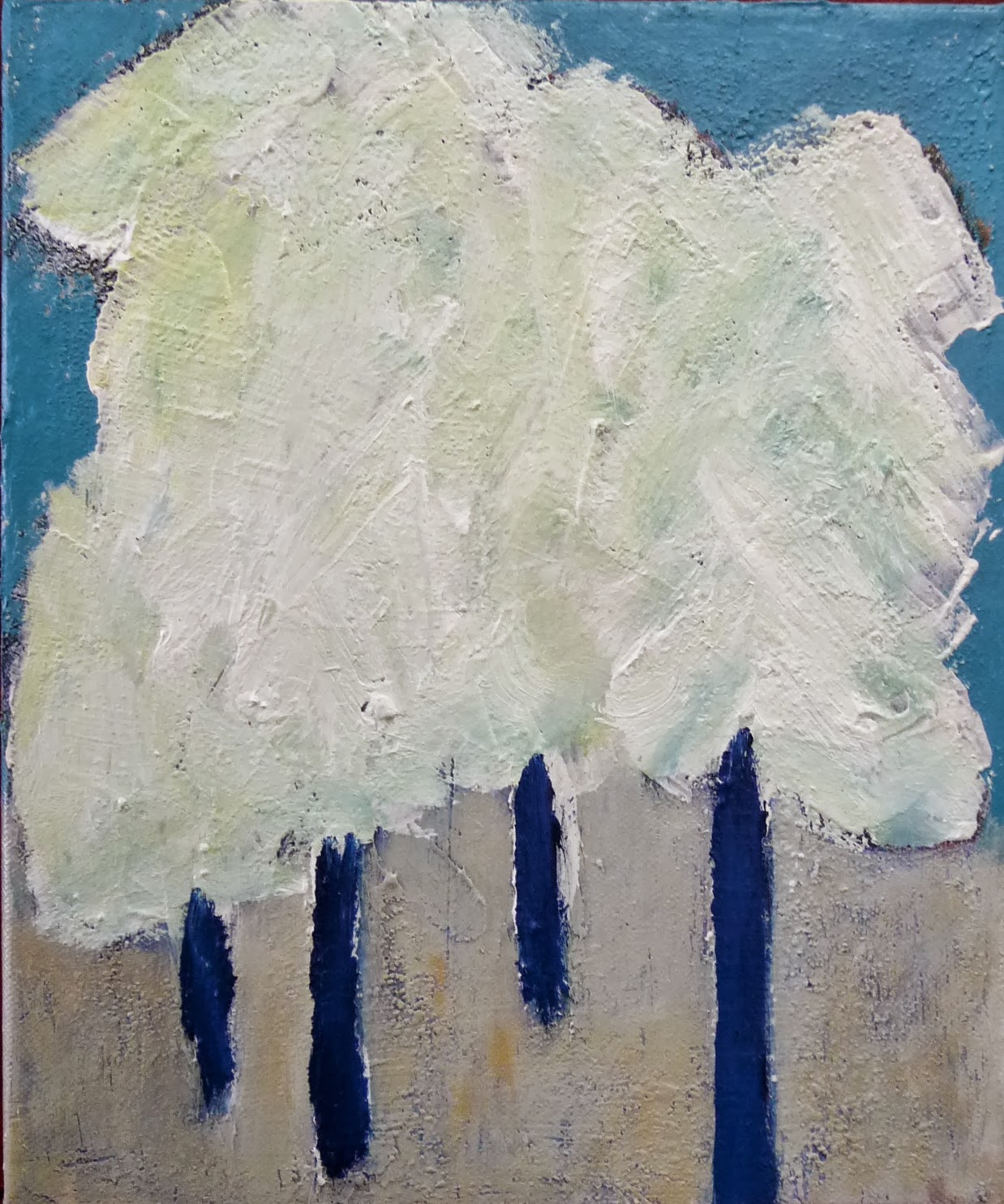
Arboretum I-XV 2013 each element 30x20 cms


Cradling I-IV 2013 acrylic each 60x180 cms


Arboretum consists of 40 small canvases using acrylic, talc impasto.


Finished works delivered today - yippee!


The work I finished this morning and delivered to Arts Space Wodonga after teaching was developed at an intense rate over the last period since I did the last entry for this blog.

The intensity of the green in the current landscape was too much to deal with in the panoramas - I had to subvert the green to be able to get on with the paintings. So I took the first two panoramas back to a textured surface and started again.
Using a photographic resource I continually battle with the cultural authority of the photographic 'truth'. It's a construction like any other composition but the amount of information in a photograph is powerful and has an authority.

I tackled the conundrum between using information gleaned from the photo and making a painting that was paint first and information second. I solved the problem one Saturday morning by literally flinging lots of lovely red paint at the canvas and starting whole new works.

By eliminating the colour references I was able to 'draw' what I needed to depict in several tones of red from dark Rose Madder Deep through Napthol Crimson and Quinacridone Red to reliable Cadmium Red and Napthol Scarlet. Such wonderful colours. What I ended up with was the basis of a red tonal structure to which I could add information gleaned from the photographic reference without losing the sense of a painted work that had a metaphoric potential.

The idea of the paintings is that our regional centre of Albury Wodonga is literally encircled and cradled by wonderful hills and landforms such as Table Top.

Two of the views are looking south  and south west from Eastern Hill to Wodonga. The hills around Wodonga are so familiar to me that when driving north from Melbourne I always know when I am 'close to home' when I see the start of the hills south west of Wodonga.


Looking south and south west to Wodonga


From Eastern Hill looking west across the city to Monument Hill

The next view looks west from Eastern Hill to the Monument at the top of the hill above Dean Street. This 'rocket' monument, as my daughter referred to it when a little girl, is actually a wonderful example of an Art Deco memorial sculpture and is the largest monument to WW1 in the country.
From east of the city one realises how encircled it is by the higher Nail Can Hill and the range of hills that lope westwards towards Splitters Creek.

The view north from Eastern Hill takes in a foreshortened view over the airport to Red Light Hill and north to Table Top.
The bottom image is the painting referring to Red Light Hill and beyond to Table Top

These are paintings with I hope, loose brush work, which come together as an image from a distance - using the good old principle of optical mixing!
I've never really understood the relief some viewers express when having stepped back from a painting they are reassured by the way everything comes together.
When I look at a painting I want to be close to the action on the canvas!
To see where the hand of the artist has been - the hand that probably has been gone for a good while but the evidence of the hand and the vitality and the energy remains.

The photos I have taken will be replaced by better ones - these I took in the studio under available light.

Next post will show the 40 tree paintings I've done to commemorate the 40th anniversary of the growth centre of Albury Wodonga.

Thursday, September 5, 2013

Colour and rain

I can't help feeling the irony of painting a series of panoramic views of the hills and ranges that ring Albury Wodonga in this green, green time. The landscape at the moment is just so beautiful in a lush, green way. It's so easy on the eye.
The trip up the Olympic Highway is spectacular with the lush growth and the wonderful canola yellow. Usually the yellow of the crop is a bright patch in a drearier dry landscape and in the drought years it was the only colour, apart from the blue of the rainless sky, in a very very dry and dead vista.
So now I am painting the hills of Wodonga and am trying to get the intensity of the grassy patches, the olives and brightness of the well drenched trees and the far off blue of the distant ranges.
It does feel a bit weird. Two years ago for the Hume Wodonga Art Prize I painted the hills south west
of Wodonga and the painting was yellow ochre and gold and umber.


Yellow Afternoon 2011

Weather Changing I, II 2011

Anyway for this upcoming exhibition I will be 'in the momen't and just attempt to solve the problems at hand.

Apart from evoking the sense of distance, keeping the work loose and dynamic yet keeping a degree of measurement the palette will change with each session in the studio.

 Working quickly before work need to broaden out the scale and knock back the surface.

 Better scale to show a city nestled withing the hills.

Shaking up the whole surface with a warm ochre wash.

Starting number 2, learning from the first to be simpler.

 Light and dark and that green.

Knocking back the saturation.

Keeping loose and adding information is the challenge. The start of a painting is fun and exciting. Then the fun becomes something to hold onto - best to walk away at times. I like working for an hour or two then letting the things dry and coming back later.

Sunday, September 1, 2013

Early Spring sunshine and warm weather

In this part of the world it is warm and sunny, incredible spring weather. Not long ago thermals were an essential wardrobe item.

Yesterday afternoon spent beside Hume Weir, now at 99% capacity. So full with the countryside so green it's unbelievable. Intensely emerald green grass is just beautiful and the green sets off the gum leaves really well.

In Albury the magnolias are fully out, blossom everywhere, daffodils and bulbs too. The perfume of the wild growing freesias on the nature corridor from Nail Can to the river is exquisite.

Re painting - after the second session on the first work it seems that my day in the sunny green landscape has affected the palette. Early days yet but getting a better sense of the sweeping vista from Eastern Hill back to Wodonga.


Sunday, August 25, 2013

Happy Winterhappy 4-6pm Saturday August 24

Winterhappy opened yesterday with many friends attending. The show consisted of wooden assemblages by Susie Losch, black walnut dyed paper constructions by Nan Hoysted, oil paintings by Mary-Rose Riley, mixed media works by Portia Janson and my six oil paintings.

 L-R Portia, MJ, Dorothy from GIGS, Mary-Rose, Nan and Susie. It was a great afternoon with a big crowd of friends to help celebrate the show.

Back into the studio this afternoon to get on with the work for the exhibition The Experiment which is to open October 7 at Arts Space Wodonga.
When I start new paintings I always work with acrylics initially. It has been a few weeks since I have studied the photographs of the hills surrounding Albury and Wodonga. I did a few graphite sketches to get away from the photographic image and to loosen up.


This sketch is looking north towards Red Light Hill and Table Top beyond. Between my position and the distant hill lies the airport, Lavington and Springdale Heights, a big slice of Albury.


This sketch was made from another composite panorama looking south from Eastern Hill over South Albury to Huon Hill and Wodonga showing the gentle ring of hills to the south west of the city.


This is a big canvas and I like to work flat at first but also work it vertically so I can get back.


This is the first stage of the painting. Previous to this session I had coated the 1.8 x 60 cm canvas with a mixture of talc, glue and gesso to roughen up the surface and give some extra tooth. This is what I did to the 40 canvases for the series of trees. The original photo is from Eastern Hill taken late on a winter's afternoon. The foreground has much contrast between the long shadows and the pale grasses and shafts of sunlight. Then the middle ground is a long way off which then recedes a few kilometres to a broad view of the city of Wodonga and hills. The curving foreground acts to unite the vast breadth of the view and will be good. Much work is to be done but I want to keep an energy and freshness. the panoramas will need to sit happily with the 40 small works featuring the trees.

Saturday, August 10, 2013

Final session on the skies


Last opportunity to play with the little canvases.
Although the oil paint takes so long to dry and the installation is next week I've enjoyed using the oils again.


Saturday, August 3, 2013

Sunday Sunny Sunday

Gearing up for afternoon in the studio. Made it for a few hours yesterday. I used to feel hard done by only managing one day per week in the studio compared to a previous life years before but managed to turn that 'poor me' thinking around and realise how fortunate I am to even have one uninterrupted  day to get heaps of work done.
It is very good to have a separate space to work in no matter how old and crappy. I think there is some sort of relationship between the 'new beautness' of a studio and the amount of work done in it. I've studied and then taught in many old ex army huts that served well as very productive and creative spaces. I have known people to have studios built for them only to never ever use the space as a studio because it wasn't to get dirty...ridiculous.The studios at my work place are now 15 years old. They are used on a daily basis and still look good because of the philosophy of leaving the space better than when you found it. Sort of like the National Park adage - take your mess with you and leave it as you have found it.
So for fear of realising I am procrastinating I will show the one work from yesterday.


It is always nerve wracking for me to go from the quickness and lightness of using acrylics to oils. It's been a method since art school to start to paint with acrylics because of the directness, the ease of working with colour in acrylic form, cleaning up with water, the ease of mixing - everything about acrylics I love.
I have never tended to start a work with oils because of the need to use solvent to get a work happening all over quite quickly. The water based oils are terrific and I'd say they will improve. I am happy using them and can combine them with straight oil paints as long as the proportion of waterbased oil is higher than the solvent based paint. I keep the analogy of an egg mayonnaise in mind.
But when I transfer to oils with these very small paintings because of the density and weight of oil colour I have to be confident because one needs to do the whole thing and bury what is already there in order to push the work.
The work above is the first session with the oils, I'm establishing the zones of tone and colour and there is much more to do.

Limbered up on the other five canvases this afternoon and can see how stiff I was with the first work. Now I can wait until the oil paint dries - in this weather it will be at least 4 or 5 days before I could put paint on the top again and will need to do it with fingers or a spatula rather than drag a brush across the surface.


 Am following the sense of direction as per the actual sky I saw but as with any painting the paint is far more important to me than any silly sense of accuracy. The sunrise each morning is unique, we've all witnessed the sky in its magnificent mode whether morning or evening. These little paintings are literal enough. So I'm enjoying the accidental effects of tone and colour with late additions and reworking.


The sense of movement is very grand in this one.


These aren't finished. This image will have references to the ground in the foreground. Also colour is something to exploit in paint. I am using heavy viscous oil paint to capture a sense of the celebratory early morning light show - possibly counter intelligent but a great process.


If each of the little paintings has a different mood then I will be pleased.


This composition will have more detail in the foreground and a sense of looking across to other hills.


This will be loosened, the dollop of warm orange near the mauve shape has helped.
The blue in the foreground will be buried under more dramatic darker tones. At dawn everything is backlit by the sky so the trick is to suggest detail within a narrow band of dark cold colour.